
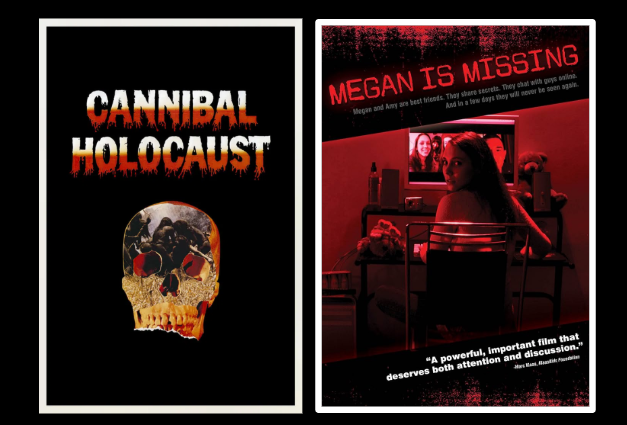
After a long hiatus, did I come back a fully-fledged hater? Do I actually hate Cannibal Holocaust and Megan Is Missing, or am I just engaging in some good old-fashioned clickbait? Where are the promised “horror movies with a heart” if I’m just going to dunk on two movies? You will have to keep scrolling to find out!

Moral Disgust and Horror: When Does It Cross the Line?
As a horror fan, I really appreciate when another horror fan can help me think about the genre in a different way, and the combination of listening to the Scarred for Life podcast’s “Episode 129: Author Eric LaRocca and Martyrs (2008)” and Nina Nesseth’s book Nightmare Fuel: The Science of Horror Films did just that.
In the Scarred for Life episode, co-host Terry Mesnard acknowledges the technical expertise and interesting themes of Martyrs, but admits he cannot get past how misogynistic he finds the film given that a fairly long portion of the runtime features the main female character getting brutally tortured. I am a fan of Martyrs, and I found it surprising to learn that a fair amount of horror fans are so repulsed by the film. But I also felt relieved knowing I wasn’t alone in being an ardent fan of horror and still being put off by some popular titles.
Nina Nesseth’s book Nightmare Fuel: The Science of Horror Films explores how and why horror films impact us physically and mentally. Although a great bit of the book focuses on our responses to fear, there are a few pages where Nesseth discusses disgust as another popular element of horror movies. She states disgust is distinct from fear, and can come from our natural aversion to disgusting things we associate with illness or contamination (e.g. rotten food or vomit). She mentions disgust can also come from witnessing culturally-based disgust triggers (e.g. insects are a regular part of cuisine in some cultures vs. other cultures where it triggers a sense of repulsion). She acknowledges that fear and disgust often go hand and hand in horror even though they are manipulating different parts of our brain when we watch horror movies.
Although Nesseth focuses on physical disgust, it made me think about the way horror films play with moral disgust. Horror films and moral disgust often go hand in hand a lot of the time, with the horror being derived from acts of moral transgression like desecration, torture, stalking, and murder. But can a horror film ever go too far with its moral transgression?
I think this train of thought explains the thin line between “horror movies usually contain upsetting things and I’m intentionally inviting that by watching them” and “this horror film did something so morally disgusting I dislike it even though I acknowledge that is a common goal of horror”.
This in turn made me think carefully about two horror movies that really repulsed me: Cannibal Holocaust and Megan is Missing. It probably isn’t shocking based on my writing and the movies I focus on that extreme horror is not my thing. Like many people, I have a weird interest in reading the plot summaries of the most disgusting things people can string together to make a plot, but I know myself well enough to leave these movies alone in most instances. I want to talk about both these films: why I watched them despite knowing I’d probably have a visceral reaction of moral disgust to them, and why they bothered me so much when the point of horror is precisely to push your boundaries and bother you. I will also compare them to other disturbing horror movies I’ve seen that didn’t bother me as much (including A Serbian Film!) to try and pinpoint the difference in my mind.
Disclaimer
First a huge Content Warning: a big issue I have with these movies involves sexual violence, so I would sincerely look at content warnings for both films before going further if that is a concern for you.
Second, a reminder that these are my subjective opinions of these movies. If you love them, good for you. I’m not trying to change your mind or say your subjective opinion is invalid.
Finally, there will be huge spoilers for these movies.
SPOILER WARNING
Cannibal Holocaust
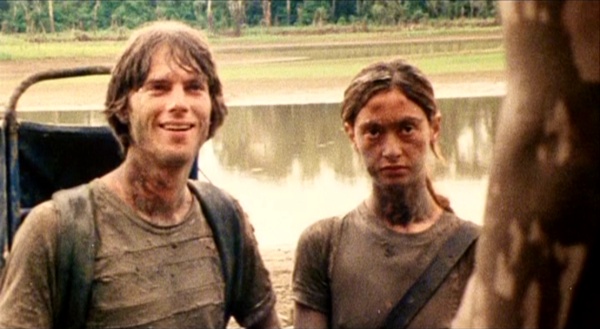
Over time, I’ve gotten fairly immune to feeling like I need to see certain horror movies. But for my own personal interest, I couldn’t resist checking out what is considered the first found footage horror film.
Back when I watched this in 2016, I was still tweeting #31HorrorFilms31Days on my public library’s Twitter account. When the credits rolled on Cannibal Holocaust, my wife took off the headphones she was wearing to drown the movie out and simply said, “you cannot tweet about that as the library.” And like Han Solo, I simply looked at her and said “I know.”
For years, all I heard about Cannibal Holocaust was how horrific the actual animal torture and killing was, so I had mentally prepared myself for that as much as I could. The turtle scene is especially horrendous, with the film crew ripping and breaking at the turtle’s shell till its insides are on the outside. It is the epitome of cruelty for the sake of cruelty. No dedication to “art” justifies the real torture of a living creature that cannot consent to what is happening.
What I had not prepared myself for, because it was so rarely brought up in what I did read about the controversial movie, was the pervasive depictions of rape and sexual assault throughout the film. The multiple scenes of sexual violence really bothered me. And it bothers me to this day most discussions I see about this movie are male viewers saying “it isn’t even that hardcore” without even addressing the multiple, graphic rape scenes.
I even watched Shudder’s Cursed Films episode on the movie to see if it could assuage me of my negative feelings towards the film. It did the opposite. The main actress Francesca Ciardi describes director Ruggero Deodato as abusive. At one point, the director jokes about how she looked “too into it” during the scene where she is gang raped. He also mentions the 14-year-old girl who played one of the tribal members who is gang raped by the American film crew had never seen a camera before and did not seem to completely understand what was happening as the actors feigned raping her. Again, for me any interesting commentary the film has is undercut by the tactics it used to achieve the commentary.
Now, the reason I decided to finally share this post is because being a horror fan has really taught me that mileage varies widely when it comes to art. Just because this movie viscerally bothers me doesn’t mean I can’t appreciate aspects of it.
A small thing I can appreciate is that the film has the most strangely soothing/upbeat opening music sequence I’ve seen in such a disturbing movie. It set a terrible tone for what’s to come, but it is fun to hear it in the wild and recognize, “wow that’s actually the opening theme of Cannibal Holocaust.”
I can also appreciate that the movie depicts the American film crew as the true monsters of the film because of the way they knowingly manipulate, exploit, rape, and murder the tribal members just to create more shocking footage. Harold literally wonders to himself, “who the real cannibals are” at the end of the film. And to further drive this message home, a truck then goes by him on the street with the same distinct symbol one of the cannibal tribes used. The cannibal tribes may be depicted as stereotypical “savages” (and to be clear they are rapists, murderers, and you guessed it…cannibals). But unlike the truly morally bankrupt American film crew, they at least have a simply system of black and white morality even if it is horrific in its own right. Still, this isn’t a unique theme to this movie, and I know I didn’t need to see multiple gang rapes and animal torture to make this point. For a better depiction of the depravity of the “if it bleeds, it leads” news cycles and what it does to us, there’s Christine which is based on a true story.
Megan is Missing

I heard rumblings about Megan is Missing back when it originally came out in 2011, and I was intrigued as a young girl who grew up in the heyday of talking to complete strangers in AOL chatrooms. For some reason, I didn’t end up watching it then and kind of just forgot about it. When it became viral again in 2020 thanks to TikTok, I decided to watch it partially because I had read the founder of an organization focused on preventing child abduction had endorsed the film. I think I had gotten wind the movie would involve sexual assault, but figured an endorsement like that must mean it was grounded in realism and delivered its message in a reasonable and effective way. I was mistaken.
By the end of the movie, I was disturbed (mission achieved Michael Goi!), but I was also angry. Megan is Missing is heavy-handed and replete with shock value storytelling in the vein of a Lifetime movie of the week.
My primary issue involves the ridiculous dichotomy between Amy and Megan as best friends, and the impact of characterizing them the way this movie does. Amy is presented as incredibly innocent and naïve. She lives in a stable, two-parent household where her parents dote on her. She still sleeps with her beloved teddy bear. She is ridiculed by Megan’s other friends who essentially act like they are in the movie Thirteen or Kids.
Meanwhile Megan is the archetype of a tragic, “broken” party girl to be pitied by viewers. We learn she was raped by her stepfather and blamed for it by her mother. This is obviously horrific. But this isn’t enough for Megan is Missing to make its ham-fisted point, because Megan also recounts reluctantly giving oral sex to a male camp counselor when she was 10 (she tries to play it off as consensual even though it clearly wasn’t nor could it be). She is also seen reluctantly giving oral sex to a teen boy at a party as well as doing drugs and drinking. It is implied she’s…you guessed it…reluctantly hooked up with a female friend (love that sprinkling of homophobic “these kids are so morally bankrupt they even lez out sometimes!” storytelling) . Megan’s desire to be loved and treated with respect by someone besides Amy leads her to interacting with the internet predator who eventually rapes and murders her completely offscreen.
I suppose defenders of this film would say it is important to show the ways trauma can impact behavior, and cause people to act in self-destructive ways. But it all feels extremely unnecessary and over the top. And moreover, as tragic as Megan’s story is, it’s merely a jumping off point for the film to deliver its true moral message by brutalizing Amy onscreen. Most of the bad things that happen to Megan are offscreen. But it is the innocent, naïve Amy who is shown horrific pictures of Megan being tortured. It is Amy we see abducted while recording a vlog of how much she misses Megan. It is Amy we see begging her captor for her teddy bear and being made to eat dog food on all hours. It is Amy we see raped for over two minutes in an unbroken shot. It is Amy who we see buried alive in a barrel next to Megan’s decomposing body while begging for her life and saying she loves her captor in another unbroken shot.
This contrast gets at the heart of my contempt for this movie. The lesson is not watch out for internet predators (after all Megan had already been victimized by multiple predators IRL which really undercuts the stranger danger message). The lesson is “look what happened to someone like Amy because of her friendship with someone like Megan.” The danger Amy finds herself in whether with Josh or at the “teenage” rave with adult male guests is because of her friendship with Megan. The implications are that Amy would have never been in these precarious situations had it not been for Megan’s influence.
These characters are not written this way for teenagers. They are framed in this way to work adults, and particularly parents of kids like Amy, into a moral panic by showing even a girl like Amy could fall victim to a maniac thanks to her friendship with Megan.
I think I would be less bothered if the movie just existed and wasn’t uplifted and highlighted as an important PSA about the dangers of internet predators (which like many moral panics have been largely exaggerated and misunderstood – for more this is a good article, How We Were Fooled Into Thinking That Sexual Predators Lurk Everywhere).
It is actually harder for me to say anything nice about Megan is Missing than it is about Cannibal Holocaust. They are interesting contrasts in intent versus impact. Cannibal Holocaust‘s intent is sleazy exploitation. But it manages to have some interesting commentary on sensationalist storytelling in media and the way “civilized” white Americans can be the real monsters that at least gives me some begrudging respect for it. Megan is Missing‘s intent is to use the trappings of horror to lure teens into watching a PSA about internet predators, but the impact is showing sexualized danger as omnipresent for children and seemingly inevitable. Josh is a psycho, but so is Megan’s stepfather. The movie also seems to bask in sexualizing its young teenage characters while trying to make a statement against sexual violence.
Megan is Missing does have a brief moment calling attention to “Missing White Woman” syndrome. In a news brief about Megan’s abduction, the newscaster talks at length about Megan before making a brief, perfunctory statement about a missing Black girl.
I’m sure one could argue the movie is trying to comment on the gross, pervasive chance of sexual violence that lurks just at the edges of life for young girls. But I think that is giving more credit than is due.
Why Cannibal Holocaust and Megan is Missing Bother Me in Particular
Despite my aversion to extreme horror, I’ve also seen Faces of Death, Martyrs, The Poughkeepsie Tapes, The Sadness, and probably most notably A Serbian Film. I’m not going to act like those movies didn’t upset me, but none of them bothered me the way Cannibal Holocaust and Megan is Missing did even though two of them also involve graphic depictions of sexual assault. So what gives?
SPOILER WARNING
As disturbing as those five movies are, I think the reason they don’t bother me the same way is the humanity still at the root of them. With the exception of Faces of Death which doesn’t really have a narrative, the other extreme movies had characters who still had some semblance of their humanity by the end of the story.
Martyrs is the most obvious example – the love between Lucie and Anna is a driving force for Anna especially as the narrative progresses. Mademoiselle and the secret society are cruel but their cruelty has its own messed up purpose – similar to the cannibals in Cannibal Holocaust. The cruelty is just a byproduct to a larger plot, but it isn’t the point.
The Poughkeepsie Tapes distances the viewer from the depravity at its core by presenting itself as a documentary. The talking heads share your horror at the tapes, and remind you that most of the world isn’t that deranged.
With The Sadness, the infected are sadistic and I knew there was sexual violence. It is disturbing, but the ending scene illustrates there is an underlying humanity still within the infected. Only now, the way they express that love and humanity is incredibly depraved. It is showing people unleashing their darkest impulses (and acting bizarrely joyous about it in many instances) while we learn that their humanity is still buried deep inside unable to stop themselves. As depraved as they are, there is still a semblance of what makes humans human lurking in the characters of The Sadness.
Don’t get me wrong, I’ll never watch A Serbian Film film again. On paper it is easily the most depraved of the bunch, pretty much to the point of self-parody. But despite its excessive brutality, it ends with the indication that the protagonists have retained enough of their humanity to just end their lives knowing they cannot live with what they’ve done. And at least the protagonists in the film were manipulated into their most morally transgressive actions.
In Cannibal Holocaust, the protagonist is the only voice of reason and humanity. It depicts most everyone else with the exception of minor characters who exist to be victimized as morally bankrupt rapists and murderers.
In Megan is Missing, Megan and Amy don’t have the agency afforded to the protagonists in these other extreme horror movies. They exist to be brutalized as an example of what can happen to teenagers who trust the wrong person.
In both these films, most named female characters exist to suffer whether for a “point” in Megan is Missing or just for wringing out as much shock value as possible in Cannibal Holocaust. Faye’s one moment of agency in Cannibal Holocaust is to complain the boys are wasting film by filming their gang rape of an tribal girl. Their response to Faye is to restrain her while they continue.
Conclusion
My point in being a hater is not to make you hate these particular movies yourself (although I’m happy if I can put a finger on why they might bother you as well). My point is to explore when a genre predisposed on pushing boundaries and being morally transgressive goes to far for you to enjoy the movie. For some people, most horror movies are already too far gone after all. For others, some extreme horror can be a source of surprising catharsis. I have never seen I Spit on Your Grave, and I probably never will given the subject matter. But two of the most passionate defenses I’ve read of the film were from women who survived sexual assault and really found catharsis in the movie’s protagonist taking revenge into her own hands. As a horror fan, it is easy to remember that mileage can vary widely with a lot of these movies.
One last point. In a time period where censoring things we don’t like has come back into vogue, I really want to make it clear I oppose censoring or banning either film. I acknowledge my complaining about them might encourage the 3 people who read this to watch them, and that’s fine even if their takeaway is “what’s the big deal?!” I just wanted to express why they really get to me in a way that exceeds how I want horror to get to me.
That being said, I hope to get back to writing on a more regular basis. And whatever movie I write about next will be a return to form. I’m a lover not a hater at the end of the day.
 A Huffle of Horror